


This article originally appeared in Spacing, a national magazine about urban issues, in the spring of 2013. An updated version is re-posted here because of the ongoing debate about ZoneSJ. Council will host a “teach-in” during next Monday’s session on the zoning document that will implement the policy principles laid out in Plan SJ. It will hold a vote on the zoning plan that will guide development in the city for decades
.
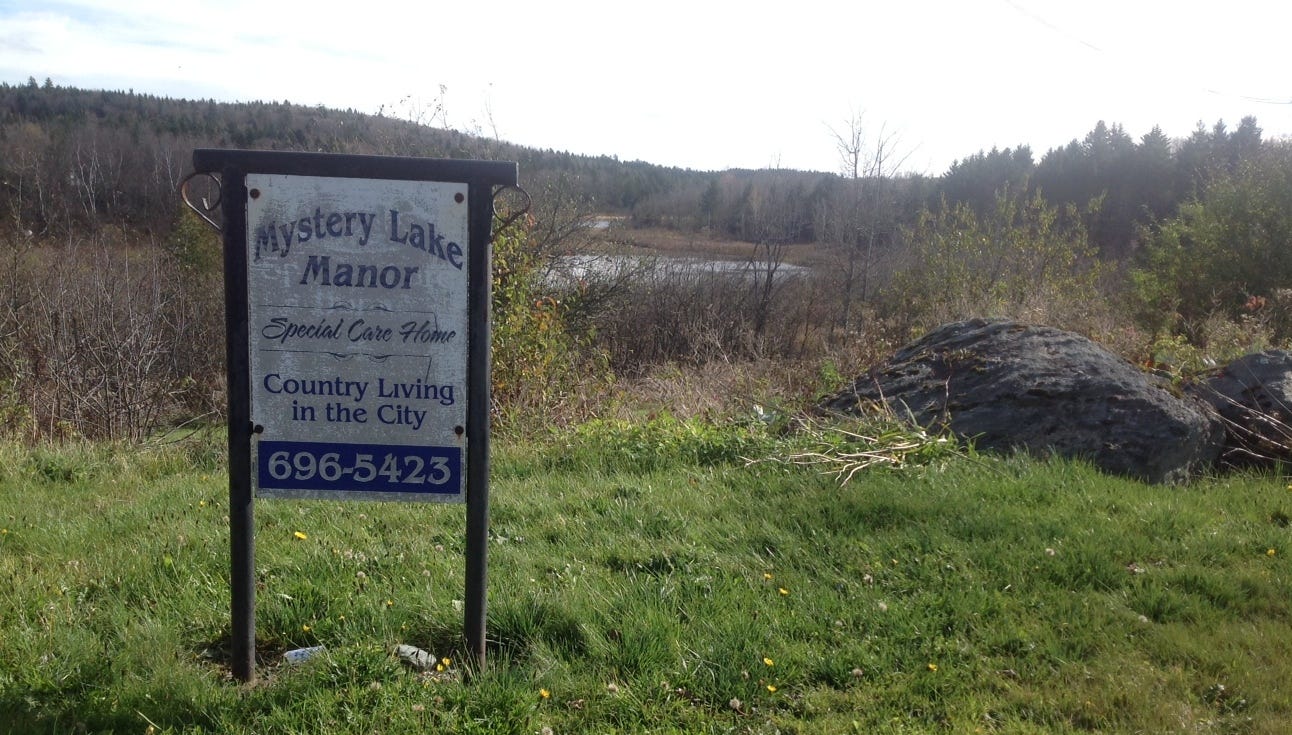
Saint John is a rural city in many ways, as I discovered on a bike ride outside the urban core one summer day a few years ago. Just beyond the suburban neighbourhoods in the eastern part of the city, the sidewalks disappear, the houses are set further apart, and roadways snake around small lakes and heavily forested land. On that bike ride, I passed a promotional sign for a special care home that captures the spirit of a rural area in close proximity to urban amenities: “Country living in the city.”

For a developer, that kind of catch phrase is a sales pitch aimed at residents that want the best of city and country living. For the proponents of smart growth, it’s an obvious sign of a sprawl problem that’s actually more pronounced here than in many other cities across the country.
Sprawl is far worse than other cities
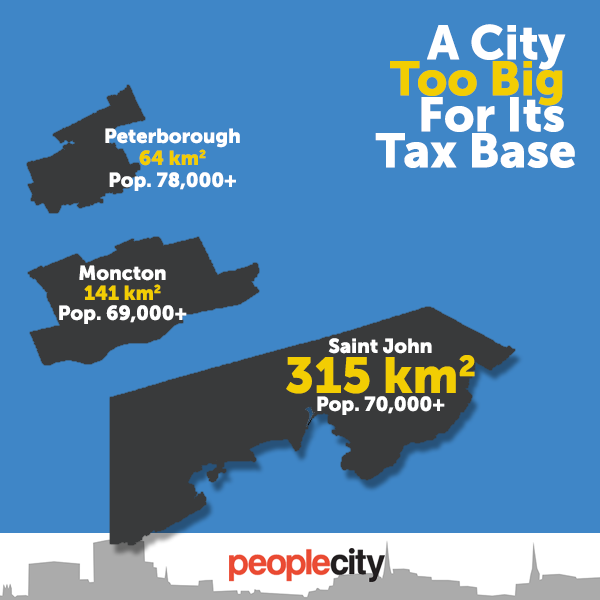
Just how much worse is the problem here? Saint John has 70,063 people (2011 census) in an area that’s about 315 square kilometres. In nearby Moncton, there are 69,074 people in an area less than half that size. In Peterborough, ON, there are 78,698 people in an area that’s even smaller – 63.80 square kilometres.
The city finally has a plan to address sprawl – a national award-winning one that’s still in the early stages of implementation. PlanSJ, which was passed by city council in 2012, creates a primary development zone that encompasses urban and suburban neighbourhoods in the centre of the city.
PlanSJ advocates tout the smart-growth, feel-good benefits of restricting development to the urban core, ideas that have taken root in cities across North America. They envision densely populated neighbourhoods where people interact at street level, and live within walking distance of everything, or have easy, affordable access to public transit.
The ‘Iron Ring’ of development
Mayor Mel Norton shares this vision; he moved to the city centre so he could walk everywhere. But he said mainly driven by the potential savings for a city that provides infrastructure and services for homes and businesses along the city’s 760 kilometres of roadways.
“One of the councillors refers to the primary development area as an ‘iron ring’,” said Norton in an interview in early 2013. “It’s meant to constrain sprawl; to grow a density that can be highly serviced at a very competitive rate.”
PlanSJ had a comprehensive public engagement process that included public meetings and workshops, and storefront office in the city centre, so Norton was confident the public would be largely onside with the new plan. I was present at many of the sessions myself, and never witnessed any opposition to the plan.
Critics emerge when ‘rubber hits the road’
The public may still be largely onside, but the critics sure came out when the rubber hit the road, so to speak, with the planned implementation of Zone SJ. At a public hearing in September, some angry residents and property developers told councillors the new city-wide zoning bylaw, which is based on the policy guidelines laid out in PlanSJ, would scuttle their plans for future development.
Council was supposed to hold a vote on ZoneSJ is mid-October, but it will now be next week before it is even debated again. Council has scheduled a “teach-in” for the Nov. 3rd session. It will then decide when to proceed with a vote.
Planning development at the local level
If ZoneSJ is passed, the next step will be developing individual plans at the neighbourhood level; this process will involved a new round of consultations involving residents and interest groups. “It will give those folks a real voice to help shape future development in their areas,” said Norton in our interview last year.
The city will face additional challenges implementing the new plan, though. Much of the housing stock in the urban core dates back at least 100 years and is in poor condition. There are currently no plans to strengthen existing incentive programs, in the form of tax relief or increased grants, for doing costly renovations on these buildings.
However, developers like Historica are demonstrating that you can do quality, commercially viable restoration work to city-centre buildings (one on Princess St. is pictured above). Historica rents apartments in the upper end of the rental market. On the affordable housing front, there have been several new low-income or mixed-income buildings constructed in the city centre in the last decade.
Suburbs need smart-growth too
The neighbouring suburban municipalities also aren’t part of the plan to revitalize the residential neighbourhoods in the city centre, even though this would be a healthy development for the entire region. The suburbs will continue to grow unchecked at the expense of the urban core; the town of Quispamsis, for example, had a 17% population increase between 2006 and 2011.
Many cities concern themselves with sprawl in outlying suburban municipalities. Saint John obviously has that problem too, but Norton is far more concerned with the sprawl inside – not outside – the city limits.
He said the city will continue to service its established rural areas, but future development will take primarily place in the city centre. “Country living in the city” may be a nice sentiment – and an option for some residents – but it’s not a realistic growth plan for the city at large.

